
Tag Archives: Arsenal

How do football clubs use factoring to gain instant access to transfer fees?

Invoice financing, or factoring as it is often referred to, is commonly used by businesses to improve their cash flow. With invoice financing, rather than waiting for an invoice to be settled, a proportion of cash tied up in the invoice can be released by a factoring company as soon as the invoice is issued.

Say a company sells cars on finance. They sell you a BMW 3 Series. It is a £27,000 motor, but you pay a deposit of £5,000 and drive it away same day. You then agree to 48 monthly payments of £269 and a final an optional final payment of £12,088.

The dealership will end up earning receiving £30,000 for you, the buyer. But at this moment in time they only have £5,000 in their pocket. No where near enough for them to replace the car you have just bought from them, which would enable them to make the next sale.

So what the dealership will do is contact a factoring company. They will explain that they have £12,912 in monthly payments set to come from a buyer.

The factoring company will buy the debt off the dealership, minus a small percentage – say 10%.

So the dealership receives £22,500 (£25,000 minus the 10%) from the factoring company, as well as the £5,000 deposit from yourself – £27,500 in total.

As you make your £269 payments to the dealership, they in turn make the same payments to the factoring company. At the end of the finance deal, a final payment is made, or the car is returned to the dealership who then sell it on.

You get a car that you can afford upfront, by agreeing to pay on finance.
The dealership receives £27,500 (a little over the original asking price).
A factoring company makes £2,500.

Whilst the dealership might have “lost out” on £2,500 additional profit, using the factoring company meant that they got the on the road price of the car upfront, rather than waiting for 48 months.

This enables them to buy more cars. And in turn to sell more cars.

Without the factoring company, the dealership would not have the cash to purchase new cars, and continue running their business.
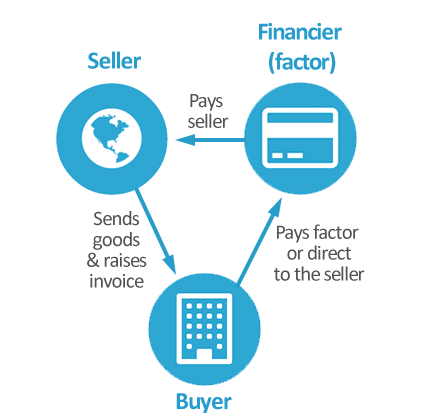
Say Arsenal are demanding £20m upfront for Lucas Torreira. Torino want to pay Arsenal £10m now, £5m next summer and £5m the summer after.

Arsenal can not complete a deal for Thomas Partey with £10m. They need the full £20m. So they enter into negotiations with Torino.

Instead of the deal being for £20m upfront, the two clubs agree that Torino pay £10m upfront, £6m in a year, and another £6m in 2 years. Torino paying an extra £2m to spread the fee over 3 summers.

“But Arsenal are still only receiving £10m this summer” you cry.

No. What Arsenal then do is contact a factoring company.

They inform the factoring company that they are owed £6m next on 31st July 2021 and another £6m on 31st July 2022.

The factoring company then buy the £12m debt for £10m.

Arsenal receive their £20m this summer (£10m from Torino, £10m from the factoring company) and then next summer, Torino pay Arsenal £6m, Arsenal in turn pay £6m to the factoring company.

And the process is repeated in 2022.

So Torino pay an extra £22m total to spread the transfer fee over 3 summer windows
Arsenal still receive 100% of what they wanted, allowing them to go and purchase Thomas Partey.
And the factoring company make a cool £2m.

Everyone is happy!

Ultimately, this means that if Arsenal sell players this summer, with fees paid in instalments, it is unlikely they will have to wait until next summer, or the summer after to access the agreement payments.

They will use a factoring company, which frees the money up straight away, allowing Arsenal to reinvest straight away.

Note: Often the factoring company will also collect the debt direct from the debtor. So Torino would pay the factoring company direct, rather than pay Arsenal who then pay the factoring company

Keenos

Arsenal set for busy week of sales

This could be the week we start to see Arsenal make big moves in the transfer market.

So far, the business Arsenal have done has been quietly efficient.

Cedric Soares and Pablo Mari have both had their loan deals made permanent, whilst Willian was also recruited on a free – 3 experienced campaigners.

The club also re-loaned Dani Ceballos and signed Gabriel Magalhaes.

On first impressions, Willian has added some busyness and creativity in the final 3rd, whilst Gabriel put in a commanding performance at centre back.

But Arsenal need to sell.

We still have 18 non-home grown players in the first team squad – and 32 players in it.

This means Arsenal need to sell before they buy, both to bring down the non-home grown quota and to reduce the squad size generally.

Emiliano Martinez will be the first out of the door. His transfer to Aston Villa is all but done (and will probably be completed by the time we hit publish!).

Martinez does not solve the squad problems however, before:

  • He will need to be replaced and;
  • He is home grown

Arsenal have been linked with both David Raya of Brentford and Runar Alex Runarsson from Dijon. Interestingly both keepers have previously worked with Inaki Cana; Arsenal’s goalkeeping coach.

Raya would be the preference as he is home grown having joined Blackburn at 17. Having a non-home grown 2nd choice goalkeeper feels like a waste of a slot, especially as we already have one too many.

This week should also be the week when Lucas Torreira and Sokratis make their moves to Italy.

The 3 players (Torreira, Martinez & Sokratis) should raise close to £50million between them. By the time Arsenal use some of the money to buy a new keeper, it should leave the club with at least £40million cash surplus to make moves.

Sokratis and Torreira leaving will also give Arsenal 1 non-home grown slot – although this could get taken up by Runarsson if he joins.

If we do see a home grown keeper join, expect Arsenal to quickly reinvest those funds into a new midfielder – my gut says Houssem Aouar rather than Thomas Partey.

Further signings will then depend on further departures.

Talk about Edouard from Celtic intensified over the weekend, but you can only see him coming in if Alex Lacazette is sold.

Likewise Thomas Partey.

With Matteo Guendouzi back in first team training, there is a school of thought that he will return to Mikel Arteta’s plans.

He has a friendship with Aouar which could be good for both players, and he would play a similar role to Partey on the right side of a midfield 3 – given the role to drive the ball forward at his feet.

With Granit Xhaka, Dani Ceballos, Guendouzi, Aouar (potentially), Elneny and Joe Willock, it makes most sense that Partey would replace Matteo.

The 3 likely out this week will not be the only ones to leave Arsenal.

That will still leave Arsenal with a 30 man first team squad once we have signed a replacement goal keeper.

The club will still expect to move on Sead Kolasinac, Shkodran Mustafi and Calum Chambers. That would drop us down to a 27 man squad, and also get us within the non-home grown player limit. 27 is a number Arteta could cope with.

It is going to be a busy week…

Keenos

Mikel Arteta’s Tactical Fluid Arsenal

Morning all.

Cracking opening weekend of football that was.

Weather was great, beers were drunk, and football was won.

Arsenal were simply superb as they brushed away Fulham with ease.

We are perhaps beginning to see Mikel Arteta’s game plan; and it is perhaps best describe by saying “tactical fluidity”.

We seemed to be lining up 343, but very rarely did players find themselves in that position.

Rob Holding and Gabriel were almost playing like back 2, whilst Kieran Tierney seemed to spend more time on the left wing than in central defence.

On the right hand side, Hector Bellerin rarely defended, and Willian was rarely got chal on his boots.

Alexandre Lacazette dropped deep so often that he almost made it a midfield 3 between Granit Xhaka and Mo Elneny.

And then we have Pierre-Emerick Aubameyang on the left hand side and Ainsley Maitland-Niles.

Where exactly Maitland-Niles was playing, no one knows. He was left wing, striker, inside Aubameyang, outside Aubameyang. Fulham could not cope.

Whilst we played with a lot of tactical freedom, it was not chaos. This was not Arsenal players not know where they were supposed to be. Every player seemed to know exactly where to stand, when to make the run, who to pass too.

We did it against Manchester City in the FA Cup, against Liverpool in the Community Shield and again on Saturday against Fulham.

Play a few risky passes in our right back position, drawing the opponents in, the opposing winger, full back and central midfielder. That in turn pulls the opponents across to our right hand side.

Then BANG! A quick break down the right before a cross field ball to Aubameyang who is standing on the left flank, unmarked, due to the left back tucking in to cover as the team drifted left.

That gives Aubameyang the time to bring the ball down, and drive into the middle at pace. Goal.

It is clearly a trap that Arteta has set up. Draw the opponents in before breaking at speed.

It is so hard to defend against because if teams do not drift left to cover players trying to press Arsenal in the corner, Arsenal would then have the freedom of the right hand side to attack (A quick ball from Bellerin over the winger and full back, down the right flank to Nicolas Pepe or Willian would see him clean through on the right).

The only way to really defend against the play is to not get drawn in. Do not try and press Bellerin and Holding in that right hand corner. But that in turn allows Arsenal to easily bring the ball out.

When you compare Arsenal’s game to Tottenham, you can see the difference between having a young, forward thinking manager and a tactical dinosaur.

It was not just that Arsenal won and Spurs lost, but the manner in which both played.

Tottenham were easily the worst team I saw play over the weekend – and Jose Mourinho is already being overly critical of his own players.

It could fall apart for Spurs quickly this season. Could a relegation battle ensue?

Anyway, this week will be a big one for Arsenal. Expect plenty of sales.

Keenos