Arsenal set for tactical evolution

After winning the league, Mikel Arteta will be reluctant to change too much – especially after the example set by Liverpool last season in one of the worst title defences this century. However, in football if you stand still you go backwards.

What I think Arteta will do this season is more tactical tweaks rather than wholesale changes.

Arteta’s set up

Since coming in, Mikel Arteta’s tactics have been fairly static:

Starting ion midfield, Arteta has tended to play a single out and out defensive midfielder – firstly Thomas Partey and then Martin Zubimendi.

To ensure that man does not get over run in midfield, the fullbacks defend narrower, in the position that has become known as “inverted full backs”. First Oleksander Zinchenko, then Jurrien Timber, he has played with at least one of his full backs dropping inside to make the extra man in midfield.

Ahead of his sole defensive midfielder, Arteta has tended to play 2 central midfielders – Granit Xhaka and Martin Odegaard, with Xhaka then replaced by Declan Rice.

This hardworking midfield makes us hard to break down, allows us to press high, but also sacrifices some creativity to create defensive overloads across the pitch. It has also led to the misprofiling of Martin Odegaard.

The Norwiegian captain has never really played in the traditional 10 role for Arsenal – that being high up the pitch, behind a striker, playing centrally.

For much of his Arsenal career, he has played in that right hand side 6 pocket, coming deep to pick up the ball off the defensive midfielder, and progressing through the right hand side. You very seldom see Odegaard out on the left, our even central, and he rarely just loiters high up the field waiting for the ball to come to him in attacking positions.

I would argue that we have utilised Odegaard in his best position – he is more of a 8 than a 10.

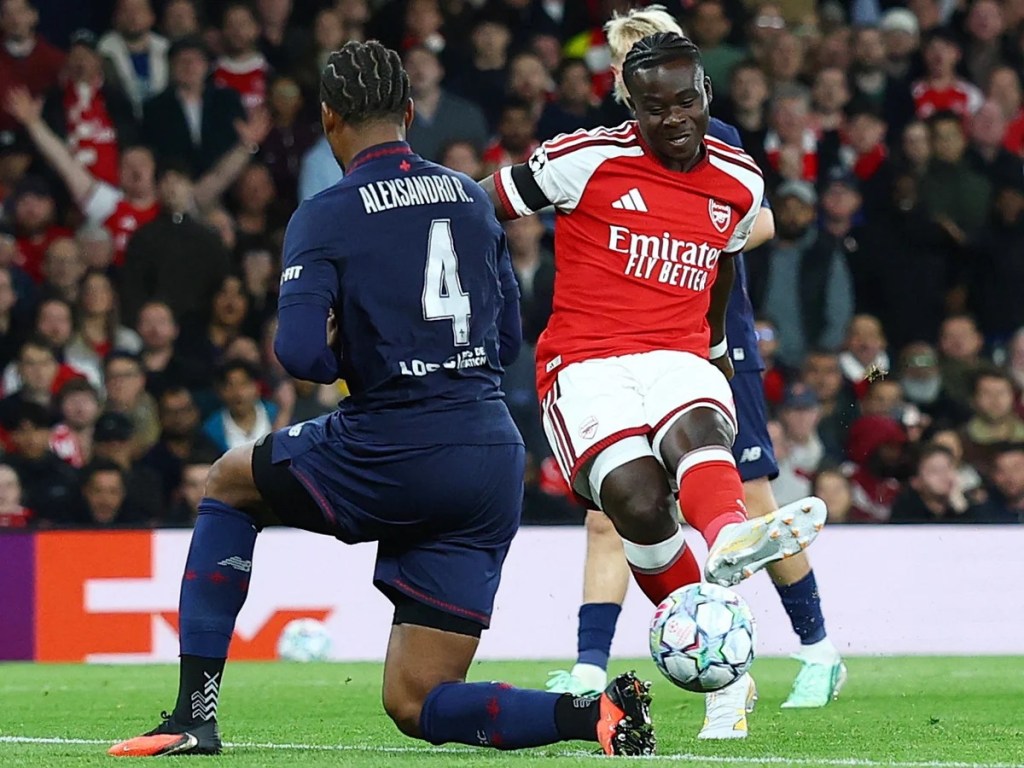
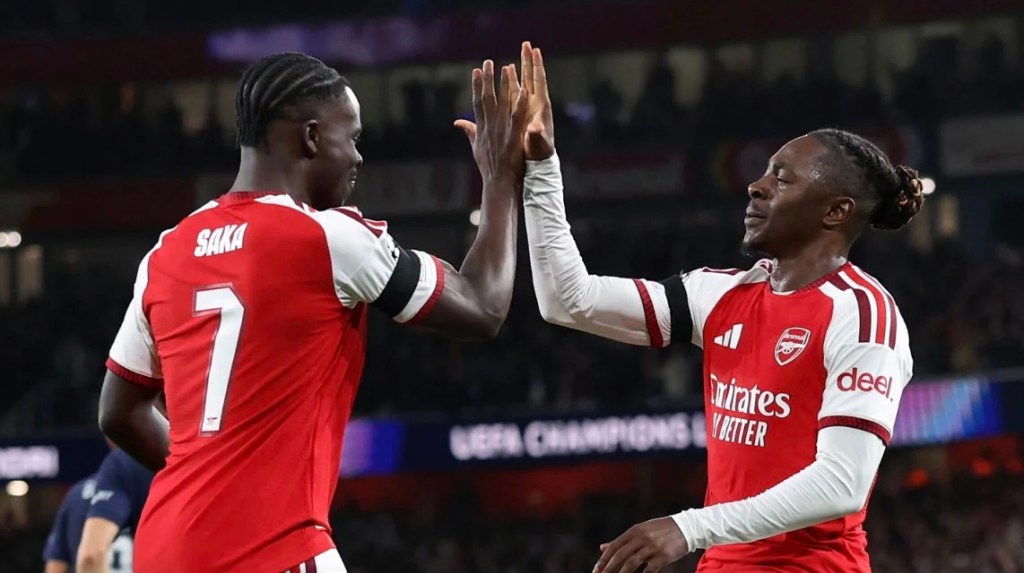
On the right hand side, we then have Bukayo Saka who can go on the inside or out, creating an overload with Odegaard. That used to be a treble overload with Ben White acting as a more traditional overlapping full back.

Gabriel Martinelli tended to hug the touchline on the left, giving Declan Rice more space to play inside. Although recently we have seen Leandro Trossard play more in the inside pocket, with both Piero Hincape and Riccardo Calafiori playing as more traditional overlapping full backs – this was to be expected as the inverted full back began to be Timber of the right rather than one of the left backs.

So how do we move on from this set up, giving us more creativity, making use a greater threat, without an huge overhaul?

A return to 4231

I expect next season, Arsenal to return to the more traditional 4231 formation which worked so well for Jose Mourinho’s early days at Chelsea.

One reason I think we will see this change is due to two positions we look to recruit for – Morgan Rogers and another defensive midfielder.

Following the progress of Myles Lewis Skelly, I did not think we needed cover and competition for Martin Zubimendi anymore – the Hale Ender has shown on the highest level that he can compete with the best midfielders in the world.

Rice and Mikel Merino, Zubimendi and MLS, Odegaard and Eberechi Eze. I did not feel we need more than that. Two players for each position and plenty of options to either set up more attacking or more defensively. But we are still being linked to new midfielders.

Either journalists have not been updated by whoever provides their transfer gossip since the MLS breakthrough, or Arsenal are simply still in the market for someone. And I think it is still the latter.

The only conclusion, therefore is Arsenal are going back to playing two defensive midfielders. Think Petit/Gilberto and Vieira or Fabregas and Flamini. At Chelsea for so long it was Claude Makelele alongside Michael Essien. One player to sit, the other to drive forward.

Zubimendi and Rice will be out starters, and MLS is capable of playing both either the sitter role or in Rice’s driving role – however Merino is inefficient in the deeper role; to slow, doesnt cover the ground, not great driving with the ball.

The new midfielder, therefore, will either be a defensive minded passer like Zubimendi, or someone who can drive forward with the ball like Rice. I think it will be the later and we will sign someone who can put in the defensive shift of Rice, cover the ground, and be the line breaker in the middle. That would leave MLS to cover for Zubimendi.

But what for the defence?

Moving backwards, a two man midfield would mean we no longer need the full backs to drop inside to create the extra man. They return to being overlapping full backs, getting chalk on their boots and bombing forward.

This certainly suits Calafiori and Hincape as well as White, but not really Timber.

I still expect Timber to be first choice next season, but I think we can all expect us to sign a White replacement and have that option of a traditional full back to continue helping create an overload with Saka – and that will be especially important when you consider the future for Martin Odegaard.

Odegaard’s future

It will be harsh to “get rid of the captain” who has just helped his team to the league title for the first time in 22-years. Odegaard has been a hugely influential figure on and off the pitch. But this Arsenal team is about to outgrow him.

If we play with that double pivot of Zubimendi and Rice, we no longer need Odegaard to drop deep. Instead he will be expected to play that bit closer to the forward, and covering horizontally from left to right rather than vertically up and down.

That will mean less of a focus on creating the overloads with Saka (hence the importance of a right back that can get forward) and more sharing his support on both flanks.

Whilst still being involved in the defensive shape of the team – there is no point Viktor Gyokeres pressing if the midfielder behind him does not follow, the switch from two 8s to one 10 will mean that creating chances becomes that midfielders main job. And I am not sure that plays to Odegaard’s strangths.

It is interesting that this summer we are being linked with Julian Alvarez and Eli Kroupi. These are certainly forwards that prefer to play behind a striker rather than your out and out centre forward. You could certainly see the pair buzzing around Gyokeres, picking up on those knock downs and providing a goal threat from deeper.

And the wingers

If we do transition from 2 8s to an out and out 10, you then create a lot more space in the final 3rd. No longer will Saka and Martinelli have a midfielder within 10 yards almost every time they receive the ball.

Instead, they will look up and see inviting space inside them to drive into. And in turn, when they drag their full backs centrally it leaves the space for the overlapping fullbacks on the outside.

Saka is more than good enough playing in this sort of role – able to go inside and out he will thrive. But Martinelli is a speedster who does not look to go inside early and could not be involved in too much of the build up play. One man who would thrive is Morgan Rogers.

So you end up almost in the Arsene Wenger Invincible days, with two full backs looking to get forward (Cole and Lauren), a midfield 2 with one who sits and one who drives (Gilberto and Vieira), a second striker behind the centre forward (Dennis Bergkamp) and two wingers that look to get inside and support the second striker rather than hang on the fringes of the game (Freddie Ljungberg and Robert Pires).

Finally…

These changes are only subtle. Asking full backs to play wider and get forward a bit more, asking Rice to sit a bit deeper. All this will come naturally.

You then have the big evolution of the forward line with the recruitment of a left winger who can come inside, a someone who offers more than Odegaard behind a striker.

The changes will also suit the reserve players – Kai Havertz is an option both as the highest centre forward and someone to play just behind, Eze would be comfortable playing off that left hand side or as a back up 10, and Noni Madueke also offers a lot covering Saka.

It will be quiet evolution this summer rather than Liverpool-esque revolution. And this is the best way to make a championship winning team better!

Keenos

Zero enthusiasm for 2026 World Cup

Every four years, the World Cup arrives with a level of excitement that seems impossible to escape. It is your TV time set for the month. 3 games a go. No need to flick through Netflix to decide on the next boxset. Football is on.

I am usually caught up in the excitement. Will watch almost every game. Head to the local for the group stages and then meet up with those I go down The Arsenal with when we reach the knockouts.

This time, however, I find myself feeling something different: exhaustion.

I have tried to put my finger on the reasons why I am not up for the World Cup. I have come up with a couple.

Football fatigue

After the Champions League defeat, I was exhausted.

Modern football never really stops anymore and we had a 9-month slog where we won the league, and made 2 further finals. That 20 days from West Ham away and the disallowed goal through to the Champions League final defeat was incredible. Through in that night in Islington when Bournemouth drew with Man City and my liver took a hammering.

The come down from Budapest was incredible, and I needed to take a step away. I have not had a drink since.

With what we did, I think I need a break from football to recharge those batteries, and that has led me to having no interest in the World Cup.

“Commercial World Cup”

This does World Cup does not feel as if it is one for the common fans. It is a commercial World Cup for sponsors. It is Americanised which is not a surprise as it is in America.

The tournament has expanded from 32 teams to 48 teams, which is just an attempt to create more matches, more games on TV, more sponsorship exposure, and ultimately more revenue. More games mean more advertising slots, and more television rights income.

The tournament is being hosted across three countries—United States, Canada, and Mexico. The United States, in particular, represents one of the largest sports and advertising markets in the world. The commercial potential of the US market has played a major role in shaping the tournament’s scale and presentation.

World Cup 2026 is a culmination of where football was already going: larger competitions, more matches, global marketing campaigns, premium ticket pricing, and greater emphasis on entertainment value and television audiences.

The ticket prices, the travel prices, and more. It is all aimed at maximising revenue and giving sponsors airtime. And do not get me started on the 30 minute half time.

I am comfortable in admitting that I do not have the energy to immerse myself in the World Cup like I would have done previously. Maybe I will watch a few games. Maybe I will catch the highlights. Maybe a dramatic knockout match will pull me back in and remind me what all the excitement is about.

Or maybe I will simply let the tournament happen without feeling the need to follow every second.

Keenos

Verdict could lead to £60m Arsenal windfall if Man City 115 charges upheld

Everton have been ordered by the courts to pay Burnley nearly £40m in compensation following legal action being bought against them by The Clarets.

in Late 2023, Everton were deducted deducted points for breaches of the Profitability and Sustainability Rules (PSR) in the 2021/22 season. This was reduced to six points on appeal in early 2024. The points deduction was applied to the 2023/24 season.

In 2021/22, Burnley were relegated, finishing 4 points behind Everton. Burnley’s claim was that had the deduction been applied in the season the offence took place, then Everton would have been relegated and Burnley would have stayed in the Premier League.

The difference in financial reward between playing in the Premier League and Championship is huge, with the play-off final often dubbed the “£200m game”. And it is based on that “loss of earnings that Burnley sued Everton.

The decision, which Everton plan to appeal, could have wider ramifications in English football. Most notably with Manchester city.

City face 115 charges, many of which are for financial misconduct between 2009 and 2018. Were they to be found guilty of the charges and be given a points deduction for the 2026/27 season, Premier League clubs could point to the decision in Burnley v Everton as a precedent that City should pay them financial compensation for any loss in revenue for those seasons they committed offences.

Premier League teams get “prize money” depending on where they finish. For 2025/25, Liverpool as champions earned £2.7m more than Arsenal in 2nd place. That might not seem much, but were Man City to be deducted enough points to have finished 2 or 3 places lower per season, across multiple seasons, the compensation would quickly grow to 8 figures.

The courts would then have to factor in loss of revenue from sponsorship and the huge one – Champions League football.

In 2015/16, Man City finished 4th, level on points with Manchester United but above them on goal difference. The next year they earned over £50m from being in the Champions League. Then in 2016/17, City finished 3rd, 3 points ahead of Arsenal in 5th. They earned over £60 million from playing Champions League football.

Based on the Burnley judgement, both Arsenal and Manchester United could make the case that they suffered a loss of earnings due to Man City finishing ahead of them, if any points deduction relates to offences that season and would take Man City below them. And that does not account for any case which both clubs may be able to make from ticket sales and sponsorship.

The money will never soften the blow of being denied success due to a club financially doping, however collectively it could be a huge financial blow for City.

We all await with bated breath for the result of the Man City case, which has gone on far to long. But even when the verdict is announced, that will not be the end of it.

City will likely appeal and, depending on what seasons the point deductions are from, Premier League clubs will be lining up for their slice of compensation.

Keenos