4-nil 2 goals for Viktor Gyokeres 8 goals in 3 Champions League games ZERO goals conceded Top of the Premier League 25 goals in 12 this season Just 3 goals conceded
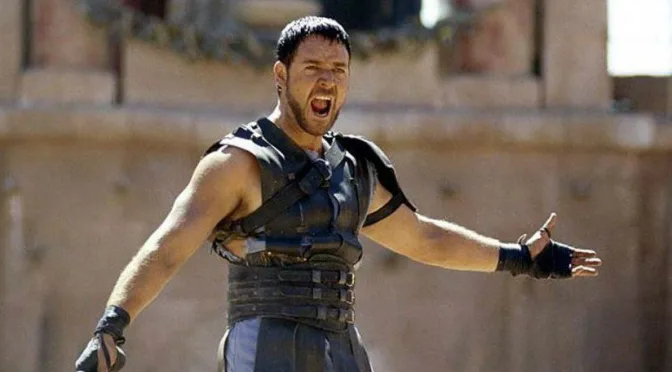
Are you not entertained?
The banter boys were out in force yesterday afternoon, predicting that Arsenal v Atletico Madrid game would be the “most boring in Champions League history”, with both Mikel Arteta and Diego Simeone parking the bus and neither intent on playing attacking football.
I really do not understand the concept of Arteta’s Arsenal being this boring, defensive team that parks the bus in every game. The facts are there for all to see.
We play with the highest defensive line in the league, whilst we face, on average, the deepest defensive lines in the league. At 58.6%, we rank 4th for average possession, and whilst also being the league leaders in touches in the opponents’ box.
Being the best side defensively in the league does not mean that you play defensive football. It just means you are well organised without the ball and have players who are disciplined and obsessed by keeping a clean sheet.
Arsenal are the only team in world football who could be criticised for limiting their opponents to one shot on target in 3 games whilst scoring 7 goals.
Many of those who criticise Mikel Arteta for playing boring, boring football are the same who, when the debate is had, put George Graham ahead of Arsene Wenger.
It was George Graham’s team that led us to sing “1-nil to The Arsenal” proudly, whilst under Wenger, we sarcastically chanted “Boring, Boring Arsenal” after the Frenchman bought a new more attacking style of football to Highbury.
So why do the same people idolise Graham for his style of play, but criticise Arteta? It is almost like they have an agenda to push.
It is also easy to forget that we have won just two games 1-nil this season. Man U and Fulham away. And they were both games we drew last season. So lets get rid of this myth that all we do is win games 1-nil.
And is there even a problem with winning a game 1-nil? No.
Last season, we were let down by too many draws – 14. Meanwhile, Liverpool had 9. That 10-point difference is what separated the teams at the end of the season.
In 2024/25, 9 of the games we drew, we led in. We also lost from a losing position once. That is 21 points lost from winning positions. Meanwhile, of Liverpool’s 9 draws, they conceded first on 7 occasions. So whilst we were drawing games from winning positions, Liverpool were drawing (and often winning) games from losing positions. That was the key story of last season.
So why are we now complaining that we are no longer drawing from winning positions? I would take 1-nil to The Arsenal all day long over going 1-nil up and drawing 1-1. And we win the league this year by turning those draws from winning positions last season into wins. Even if it is by a single goal.
Am I entertained? Yes. And if you are not loving us being top of the league, and with a 100% record for wins and clean sheets in the Champions League, then maybe football is not for you.
As I have said elsewhere, those who “demand” more exciting football would also moan had we scored 3-4 more goals this season, conceded 7-8 more, and were currently sitting 4th or 5th. They have their more exciting football, but at what cost?
I was delighted to see Viktor Gyokeres on the score sheet again last night. We said the goals would come in yesterday’s blog, and like London buses, two came in quick succession. The brace takes him to 5 for the season.
It was also a superb finish for Gabriel Martinelli.
Many, including myself, would not have been upset if the Brazilian left us in the summer. Although I always stated the bid would have to be huge and the replacement would have to be World Class.
As it transpired, no huge bid came in, and no World Class left winger came onto the market. I still maintain that replacing Martinelli is a bit of a headache, and there are only a handful of left wingers who would be an upgrade – many of whom are unobtainable.
I think Eberechi Eze offers us something different on the left wing and could well make that position his own. We would then have the raw speed, energy and directness of Martinelli and the more cute, dropping inside to tight spaces of Eze.
With 4 goals this season, he is well on the way to reaching double figures across all competitions, which needs to be his minimum standard.
In the era of “instant results” we currently live in, both Eberechi Eze and Viktor Gyökeres have come in from some criticism from certain quarters for a perceived slow start to their Arsenal careers.
Whether this criticism is just due to them being impatient (imagine the criticism Dennis Bergkamp, Thierry Henry and Robert Pires would have received in the current era), are attention seeking, or are simply negative nancies who want to find something to complain about despite us being top of the league, these people need to wind their necks in.
However, I am not saying either man is immune from criticism, nor should they not be criticised. However, there is a huge jump from constructive criticism and analysis of their game, and those who simply message “not good enough or “waste of money”.
For Eze, I feel that he is trying too hard right now. And it is a common trait for players who go from being a big fish in a small pond to a small fish in a bit pond.
Following the departure of Michael Olise, Eze was Crystal Palace’s only top attacker. Literally everything went through him. He saw a lot of the ball. Would play every minute. And if Eze played well, Palace played well.
At Arsenal, things are very different.
We have an array of attacking talent. From Bukayo Saka and Martin Odegaard, to Leandro Trossard, Gabriel Martinelli, Ethan Nwaneri and the front men Gyokeres and Kai Havertz. Our more defensive players in Declan Rice, Martin Zubimendi, and even Ricardo Califiori and Jurrien Timber are also more comfortable on the ball than anyone Palace had bar Eze.
Not only does that mean Eze is not necessarily the first name on the team sheet, it also means that when he does play, his team mates are not looking up and with first thought being “where is Eze, we need to get him the ball”.
The result is when Eze does get the ball, he tends to feel like he needs to do more with it. And rather than keeping it easy, he continually tries to make something happen, tries to impress. When actually a lot of the time the easy ball is the better option.
Also at Palace, as their sole decent attacker, Eze could try something magical every time he got the ball and escape criticism when it did not come off. Attempt something special 10 times across two games, and if it comes off once, you’re a hero. At Arsenal, the standards are higher.
You can not try and make something happen every time you get the ball at a club like Arsenal. It is about trying to make something happen at the right time, not every time. And Eze needs to adjust to that. He needs to begin playing it easier. Realise that when he receives the ball on the half way line, the key is about retaining position and not trying to beat 2 or 3 players in the hope of creating something.
It will take time for Eze to adjust.
Going from a counterattacking team where everything went through him to playing for a possession-based team where he sees less than the ball. He will need to become better at deciding what to do with the ball when he receives it. But he has the ability to do that.
For me, I still see Eze’s main position on that wide left. I see a lot of Robert Pires in him. The way that he can start on that left but look to continually come inside. And with the way we are setting up right now with Declan Rice a little deeper and Calafiori bombing on, Eze will have the space to dictate play from the left sided attacking quadrant.
Eze has already shown his worth to us. He was brought in as a utility attacker who can cover all 4 positions behind the striker. And it is that reason he will also go to the World Cup for England. The fact that Odegaard has suffered a few injuries this season and Eze has slotted in nicely shows he has the ceiling to become what is needed to play for a team like Arsenal.
Eze just needs to take a breath, relax a little, and play a little easier. Then his talent will shine through.
Inspired by Real Madrid’s Bernabéu upgrade, Arsenal are considering increasing the stadium capacity to over 70,000 whilst not changing the footprint of the stadium. And whilst work is going on, Wembley is being mooted as our temporary home.
Next year will mark 20 years since we moved from Highbury to the Emirates, and I certainly have conflicting thoughts about this.
Do we need a larger capacity
100,000 on the waiting list Average ballot success of 40% for silver applicants Average ballot success of 10% for silver applicants
These statistics will lead many to say “even 70,000 is not enough. We need 100k”. And I get the argument. But then where were all these loyal fans when the skies were grey?
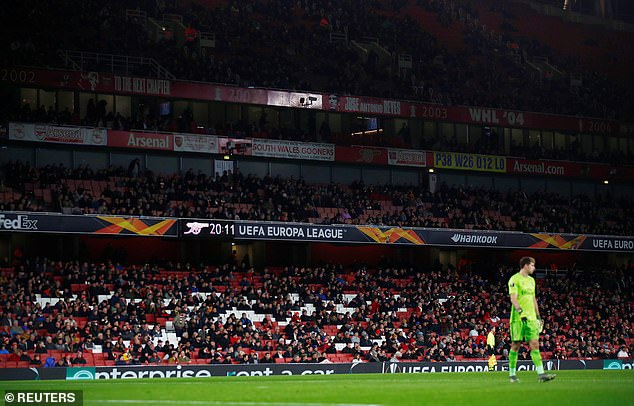
Pre-covid is still not too distant a memory. Less than 50,000 turned up to suffer the home defeat against Frankfurt as the Unai Emery-era crashed and burned. And that 50,000 was overstated as we all know Arsenal advertise “tickets sold” rather than people through the gate.
For some time before lockdown, those that went to games were noticing more and more empty seats at games, even if the club still maintained that attendance was 100%.
When the sun is shining and we are playing on the crest of a wave, there is no argument that we could sell out over 70,000 without an issue. But as soon as we find ourselves in times of trouble, will the demand still be there? Or will the empty seats expose the fair-weather fans?
But we should look to invest from a position of strength
When you are top of the tree in football, sponsors fall over themselves trying to associate their brand with your club. Positivity breeds positivity.
The best time to invest in new infrastructure is when you are at your peak, as you have the surplus cash to make investment.
2023/24 saw our revenue increase by 32%, driven by Champions League football and new deals. The summer just gone, further new commercial deals were signed that will see our revenue increase further. That means we can use the credit and financing available to us to invest in the stadium.
If we were in a downward spiral, with revenues dwindling, we would need to dip into that credit and financing to meet operating costs. There may be no better time to invest.
There was no Big 6. Just a Big 2. Arsenal and Manchester United. Arsene Wenger and Alex Ferguson. Roy Keane and Patrick Vieira.
We were always the underdog. Less revenue, smaller stadium. 3 league titles in 7 years whilst up against the juggernaut Sky, favouring Manchester United was an incredible achievement. But we needed plans to try and close that financial gap. And those plans was to build a 60,000 seater stadium, increasing our revenue by 50%.
The board sold fans a dream. That by moving from Highbury to the Emirates would see us go from hanging onto the coat tails of Manchester United, Bayern Munich and Real Madrid to competing with them, both financially, for the best players and, most importantly, for major honours.
Since we moved from Highbury in 2006, we have won 0 Premier League’s and 0 Champions League’s. That has continually led many to say “was it worth it?”
We all know that we might have to take a step back for a couple of years whilst the financial strain hit. But none of us could have predicted the global financial crisis, the UK credit crunch, and the property market going through the floor.
So much of Arsenal’s plan was to finance the stadium through building and selling flats that sat on the land around the stadium. A great idea were it not for the global recession. It meant stadium loan repayments had to primarily come from the revenue of the playing side of the club, and not hugely subsidised by the sale of property.
And then to compound the issue, the footballing landscape changed with Roman Abramovich coming into Chelsea. No longer was the game about revenue and spending what you receive. Abramovich sat there with his tanks of cash, firing huge fees and wages across Europe. We could not compete financially. No one could.
And whilst we struggled with those stadium repayments, Manchester City materialised on the horizon. Chelsea on steroids with their billions in oil revenue. And whilst we struggled financially, the likes of Manchester United, Real Madrid and Bayern Munich grew. Record revenues. Able to pluck any player they wanted from us. And they all did.
We built from a position of strength, and it took us 15-years to recover.
You can not stand still in football
What us fans went through from 2006 to 2020 will hugely influence our thinking on this matter. But it is also a fact that we can not stand still.
In 2006, the Emirates was the 2nd biggest stadium in England (discounting Wembley). Now it is the 5th behind Old Trafford, Tottenham Stadium, London Stadium and Anfield.
Manchester City are currently expanding their stadium to over 60,000, whilst Chelsea have long had plans to build a stadium in West London north of 60k. Meanwhile Newcastle United are currently working on plans for a 70,000 stadium.
In 10-years time, we could find ourselves with the 8th biggest stadium in the land. That is not a position you want to be in if you want to continue competing at the top.
And it is not just about stadium capacity, but also stadium quality.
There was a time when Old Trafford was undoubtedly the greatest stadium in the English game. The Theatre of Dreams had the largest domestic capacity in England, and was the go-to place outside of Wembley for semi-finals, finals, concerts and more. But from around 2000 their board was more concerned with adding seats than stadium improvements as they took the ground from 55,000 to 74,000.
With no further investment since 2006, Old Trafford is falling down.
We have all seen the leaks in the roof and read stories about the rat infestation. You only need to go to one game to see how behind with the times the stadium is. It is suffering from the lack of investment to the point where remedial options are no longer on the table. The best option now is to knock it down and start again. A project that is projected to cost over £2 billion.
I am not saying Arsenal are in this position yet. But if you do not make continually upgrades to your ground, every few years, then you end up in the position where Manchester United are.
Old Trafford can no longer be upgraded. And they are going to have to fork out £2bn on rebuilding it rather than spending £10m every year for the last 20 years upgrading it.
But we have only just got back to the top
Having seen us go from Invincibles to no-hopers, us Arsenal fans are thirsty for glory.
Mikel Arteta has built arguably the strongest squad of players that I have seen in my lifetime, and it feels like we are on the cusp of glory.
With this manager and this set of players, we could win multiple Premier League titles over the next 5-years and maybe even finally taste Champions League glory.
Why would the board want to throw away that opportunity to (potentially) restrict what we can spend as money is siphoned off to finance a stadium upgrade? And then we also have the inevitable dip in form that playing in Wembley will give us.
Having suffered for so long, could we just not hold back for 4-5 years and let the fans bask in some (potential) glory? Why push the button now and risk all what we have coming to us.
But will the stadium be financed buy AFC?
There is some talk that the stadium could be financed by the Kroenke’s, meaning that the debt to build the stadium could sit with KSE. That would mean Arsenal would be protected from the issues which we faced in 2008 with the credit crunch. And that whilst we would need to pay KSE back for the investment in us, they could turn those payments on and off as they wished to ensure the we remained competitive on the field.
KSE know that the best way to increase revenue, and as a result the value of your asset, is to be competitive on the pitch. It should be no surprise the steps forward we have taken as a club since they took 100% control in 2018.
With the board infighting gone, KSE have only been concerned about making us better on the pitch, which in turn increases the value of the asset they own off it. Whereas when we were under the dual ownership of KSE and Usmanov, any improvement on the pitch would have just led to SKE having to spend more to own 100% of the club.
If KSE are willing to take the stadium loans out in their name, and offer Arsenal favourable terms to repay them without the need to reduce on-pitch spending, then we should be able to rebuild without it damaging our title chances.
But do we want to go to Wembley?
No thanks.
And finally…
In the last 10-years, Liverpool have expanded Anfield from 46,000 to over 61,000 whilst winning 2 league titles, the Champions League, the FA Cup and League Cups (and finished 2nd twice with 90+ points). A fantastic achievement whilst competing against Chelsea and Manchester City’s wealth, whilst rebuilding the club.
They have shown that you can expand the stadium whilst competing for the highest of honours. If we can follow their lead, then we can become successful whilst expanding the stadium.
So what do you think? Let us know in the comments…


 She Wore A Yellow Ribbon